
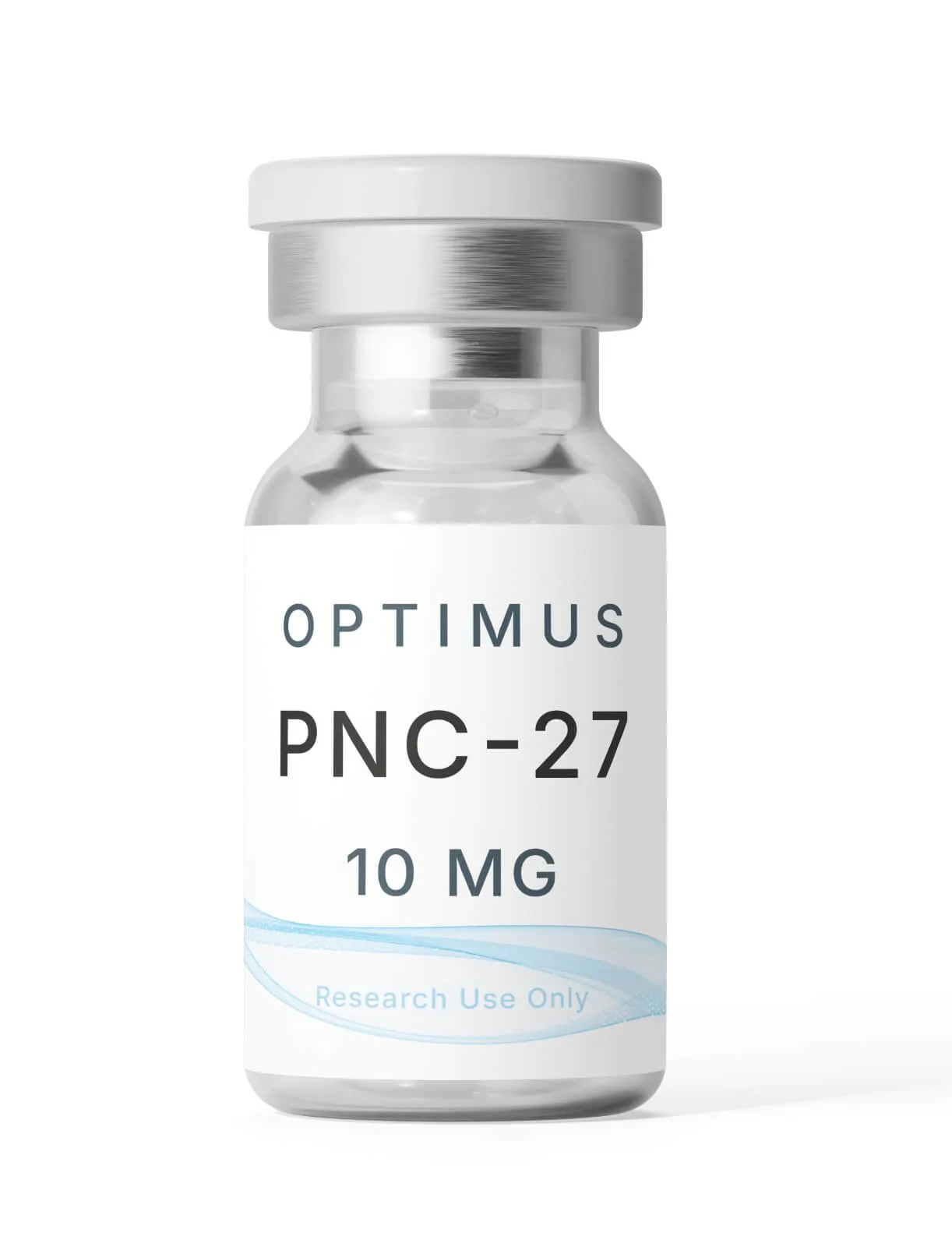


PNC-27 10mg
£59.50
| Quantity | Price | Discount |
|---|---|---|
| 2 | £56.53 | 5% |
| 3-9 | £53.55 | 10% |
| 10+ | £50.58 | 15% |
- Purity: ≥99% (HPLC)
- Batch-controlled manufacturing
- Secure packaging for laboratory handling
- Storage: Store lyophilised powder frozen for long-term stability.
- Following preparation in accordance with laboratory protocols, store solutions refrigerated (2–8 °C).
- Research use only (not for human or veterinary use)
Get notified when it's back in stock

- Purity: ≥99% (HPLC)
- Batch-controlled manufacturing
- Secure packaging for laboratory handling
- Storage: Store lyophilised powder frozen for long-term stability.
- Following preparation in accordance with laboratory protocols, store solutions refrigerated (2–8 °C).
- Research use only (not for human or veterinary use)
What makes one cell respond differently from another? This question lies at the heart of molecular oncology, where scientists investigate how differences in cellular proteins, membrane structures and molecular interactions influence biological behaviour.
PNC-27 is a synthetic research peptide developed to investigate p53-derived molecular recognition, membrane-associated HDM-2 and cellular membrane behaviour in experimental cancer models. Its distinctive molecular structure has attracted scientific interest in preclinical oncology, particularly in studies examining how engineered peptides interact with specific proteins and biological membranes.
Key Research Areas
- Cancer cell biology and molecular recognition
- p53 and HDM-2 protein interactions
- Cell membrane structure and pore formation
- Peptide-mediated cellular interactions
PNC-27 is a 32-amino-acid synthetic peptide combining a sequence derived from the tumour-suppressor protein p53 with a membrane-interacting peptide segment.
This two-part molecular design is central to its scientific identity. The p53-derived region provides a structural basis for interactions with HDM-2, while the additional peptide sequence contributes to its membrane-associated properties.
One of the most important areas of PNC-27 research involves the relationship between p53 and HDM-2, also known as MDM2.
The p53 protein plays a fundamental role in cellular regulation, including responses to DNA damage and abnormal cell growth. HDM-2 is a regulatory protein that interacts with p53 and influences its activity.
These proteins have been extensively investigated in molecular oncology because of their importance in cellular signalling and the biological processes associated with cancer.
PNC-27 incorporates a p53-derived sequence designed to interact with HDM-2, providing researchers with a specialised molecular model for examining this relationship.
What makes this peptide particularly distinctive is the investigation of HDM-2 located at the surface of certain cancer cells.
Although HDM-2 is commonly associated with intracellular activity, published experimental studies have identified membrane-associated HDM-2 in selected cancer cell lines.
This observation has encouraged researchers to investigate how differences in protein location and expression may influence interactions between engineered peptides and cellular membranes.
Another central area of investigation is transmembrane pore formation.
Cell membranes are highly organised biological barriers that regulate the movement of molecules and maintain the internal environment required for cellular function.
Laboratory studies involving PNC-27 have reported the formation of pore-like structures in the membranes of certain cancer cell models following peptide exposure.
These findings have contributed to scientific interest in the relationship between peptide–protein interactions, membrane permeability and cellular integrity.
Closely connected to this research is cellular response and membrane-associated signalling.
Cells rely on the integrity of their membranes to maintain normal biological processes. Changes in membrane structure can influence molecular transport, cellular communication and the organisation of intracellular systems.
Experimental investigations involving PNC-27 have examined these processes in different laboratory cell populations, including comparisons between cancer cell models and non-cancerous controls.
The reported differences in cellular responses have made molecular recognition an important area of continued investigation.
Scientific interest in PNC-27 also extends to mitochondrial membrane biology.
Mitochondria are specialised cellular structures involved in energy metabolism and numerous signalling processes. Their membranes are essential to maintaining cellular organisation and function.
Published preclinical research has examined mitochondrial membrane interactions associated with PNC-27 in selected cancer cell models, adding another dimension to its experimental research profile.
What distinguishes PNC-27 from many other laboratory research peptides is its combination of p53-derived molecular recognition and membrane-associated peptide biology.
Rather than being investigated primarily through conventional hormonal or metabolic pathways, PNC-27 provides a specialised experimental model for studying the relationship between peptide engineering, protein interactions and cellular membrane behaviour.
Its reported biological activity remains a subject of preclinical investigation and does not establish safety or effectiveness in humans.
For researchers interested in the molecular mechanisms underlying cellular interactions, PNC-27 represents a distinctive area of investigation at the intersection of peptide engineering, protein recognition and experimental cancer cell biology.
For laboratory research purposes only. Not for human or animal use.
Chemical name: PNC-27
Peptide length: 32 amino acids (p53-derived sequence + membrane-interacting peptide segment)
CAS: 1159861-00-3
PubChem CID: 16201774
Molecular formula: C188H293N53O44S
Molecular weight: 4032 g/mol
Purity (HPLC): 99.7%
Form: Lyophilised (freeze-dried) powder
Appearance: White / off-white lyophilised powder
For storage and handling of this material, see our guide on how to store peptides.
This product is supplied strictly for laboratory research purposes. It is not intended for human consumption or veterinary use and is not marketed for the diagnosis, treatment, cure, mitigation, or prevention of any disease or medical condition. No directions for personal use are provided or implied. The purchaser is responsible for ensuring compliant handling, storage, and use in accordance with applicable laws and regulations.
Certificate of Analysis for PNC-27 10mg — verifying purity, identity, and quality.
Related Products
CJC-1295 without DAC
Get notified when it's back in stock


Reviews
There are no reviews yet.