Why Peptide Purity Matters for Reproducible Research


This content is for laboratory research purposes only. Not for human or animal use.
Reproducibility is the foundation of good science. When experimental results cannot be replicated, time and resources are wasted. One often overlooked factor affecting reproducibility is peptide purity.
This guide explains why purity matters and what level is appropriate for common research applications.
What Does Purity Actually Mean?
Peptide purity refers to the percentage of the target peptide sequence present in the vial, measured by HPLC (High-Performance Liquid Chromatography). The remaining percentage consists of impurities such as:
- Truncated sequences (incomplete synthesis)
- Deleted or modified sequences
- Residual solvents or counter-ions
A purity of 98% means that 98% of the material is the correct peptide, and 2% is something else.
How Impurities Affect Experiments
Even small amounts of impurities can interfere with research in several ways:
- False binding signals – Impurities may bind to receptors or antibodies, creating misleading data.
- Enzyme inhibition or activation – Trace contaminants can alter enzyme activity, skewing kinetic measurements.
- Cell toxicity – Some impurities are toxic to cells, causing unexplained cell death in culture.
- Batch-to-batch variation – Low purity means higher variability between lots, making replication difficult.
For example, a peptide at 95% purity contains 5% unknown compounds. In a binding assay, those impurities could produce 5–10% background signal – enough to mask real effects or create false positives.
Matching Purity to Your Application
Different experiments tolerate different impurity levels.
- Western blotting / ELISA – 90–95% purity is often sufficient because antibodies are specific to the target.
- Receptor binding assays – 95–98% purity recommended to avoid false binding.
- Enzyme activity assays – 98% or higher to ensure measured activity comes from the target peptide.
- Cell culture – 98% or higher with endotoxin testing (impurities can kill cells or alter metabolism).
- Structural studies (NMR, crystallography) – 99% or higher required for accurate interpretation.
When in doubt, higher purity is safer – but also more expensive. Choose the minimum purity that reliably supports your assay.
How to Verify Purity Before Purchasing
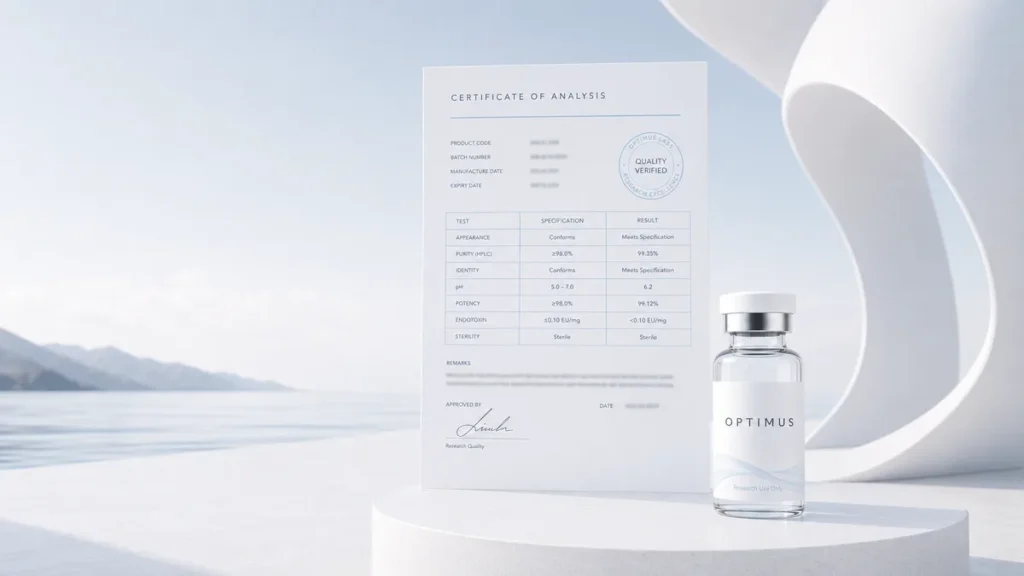
A Certificate of Analysis (COA) should always be available before you buy. Look for:
- HPLC purity percentage (e.g., 98.5%)
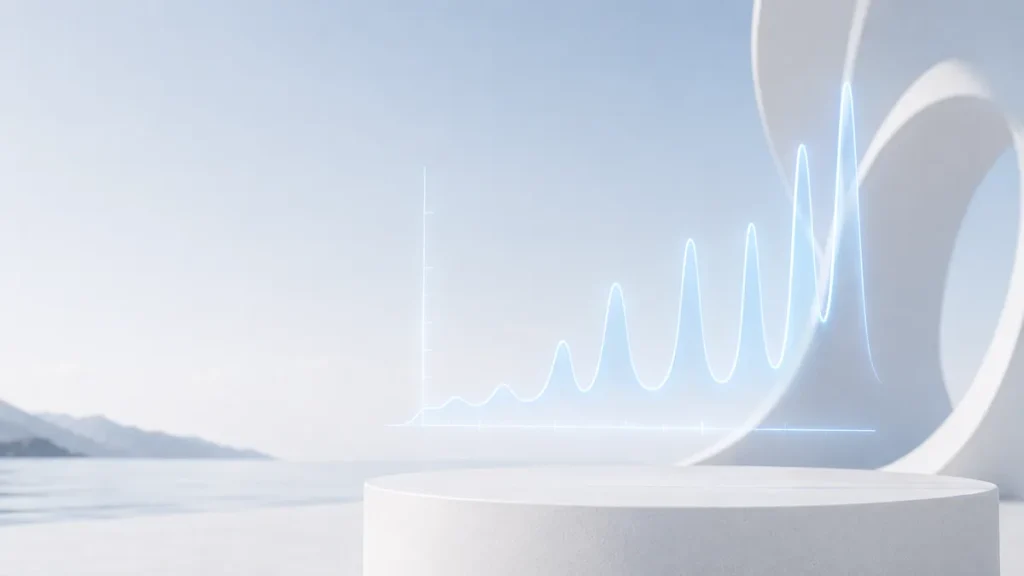
- HPLC chromatogram (shows the peak shape and impurity profile)
- Mass spectrometry confirmation (observed mass within ±1.0 Da of calculated)
If a supplier cannot provide a COA with both HPLC and MS data, consider alternative sources. Unverified purity claims cannot be trusted.
Common Misconceptions
- “99% purity means no impurities.” False – 1% impurities remain, and some may be highly active.
- “Higher purity is always necessary.” False – for screening or antibody production, lower purity may work at lower cost.
- “All suppliers measure purity the same way.” False – methods vary. Always compare COAs directly.
Peptide Purity: Quick Summary
- Peptide purity affects experimental reproducibility.
- Impurities can cause false signals, toxicity, and batch variation.
- Match purity to your application – not every experiment needs 99%+.
- Always request and review the COA before purchasing.
Need Help Interpreting a COA?
If you have a COA and are unsure whether the purity level meets your research needs, contact our research support team for guidance.
Optimus Labs supplies lab-tested research peptides, each provided with a downloadable Certificate of Analysis. Explore our Quality & Testing standards or browse the catalogue.