
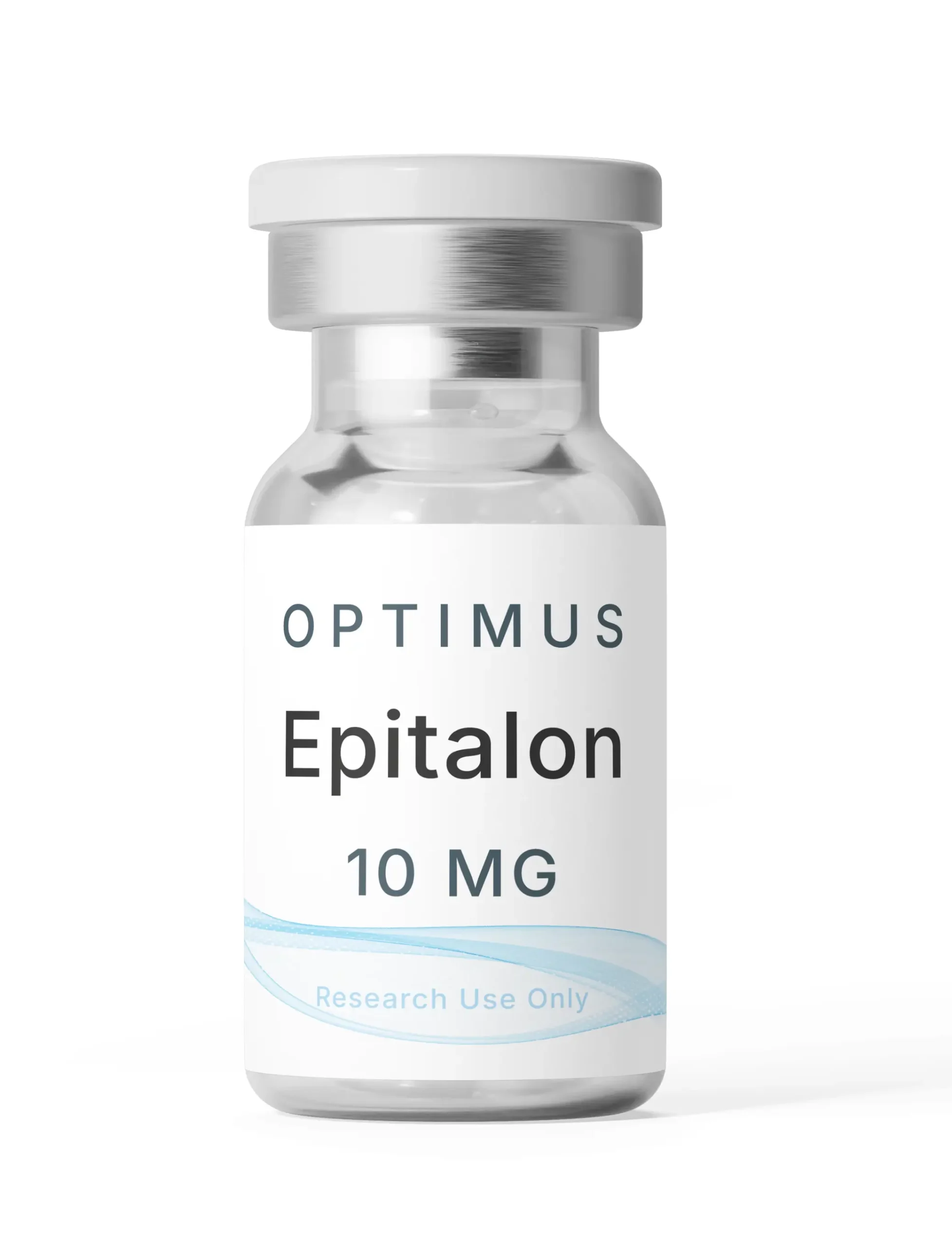
Epitalon
£14.50
| Quantity | Price | Discount |
|---|---|---|
| 2 | £13.78 | 5% |
| 3-9 | £13.05 | 10% |
| 10+ | £12.33 | 15% |
- Purity: ≥99% (HPLC)
- Batch-controlled manufacturing
- Secure packaging for laboratory handling
- Storage: Store lyophilised powder frozen for long-term stability.
- Following preparation in accordance with laboratory protocols, store solutions refrigerated (2–8 °C).
- Research use only (not for human or veterinary use)
Get notified when it's back in stock
- Purity: ≥99% (HPLC)
- Batch-controlled manufacturing
- Secure packaging for laboratory handling
- Storage: Store lyophilised powder frozen for long-term stability.
- Following preparation in accordance with laboratory protocols, store solutions refrigerated (2–8 °C).
- Research use only (not for human or veterinary use)
Understanding why cells age has become one of the defining challenges of modern biology. Epitalon has become a recognised laboratory research peptide within this field, attracting scientific interest for its role in studies exploring cellular ageing, chromosome stability and physiological regulation.
As researchers continue to investigate the molecular mechanisms responsible for these biological processes, Epitalon continues to feature in experimental laboratory research examining some of the most fundamental questions surrounding cellular ageing and physiological regulation.
Key Research Areas
- Cellular senescence
- Telomere biology
- Chromosome stability
- Neuroendocrine signalling
Originally developed as a synthetic tetrapeptide inspired by naturally occurring peptides associated with the pineal gland, Epitalon was introduced as part of a broader effort to investigate the molecular processes involved in ageing.
Since then, researchers have explored its role across a wide range of experimental models, examining how it may interact with pathways involved in chromosome stability, cellular signalling and endocrine regulation. While many aspects of its biological activity continue to be investigated, its long history within laboratory research has established it as one of the most widely recognised peptides in this field of study.
One of the reasons Epitalon remains scientifically relevant is its association with cellular senescence. As cells age, they gradually lose the ability to divide and respond to biological stress in the same way as younger cells.
Understanding this process has become a major focus of biomedical research because of its relationship with tissue maintenance, cellular function and the biological mechanisms that contribute to ageing. Experimental studies have therefore investigated Epitalon within laboratory models designed to explore these complex pathways and the molecular signalling involved.
Another important area of investigation is telomere biology. Telomeres are protective structures found at the ends of chromosomes that play a vital role in maintaining genetic stability during cell division.
Because changes in telomere function have become closely associated with cellular ageing research, scientists continue to investigate compounds that may help improve understanding of these underlying biological processes. Epitalon has featured in numerous experimental studies examining these pathways, making it a familiar peptide within laboratory investigations focused on chromosome biology and cellular regulation.
Beyond ageing research, Epitalon has also attracted interest within neuroendocrine science. Its relationship with the pineal gland has encouraged researchers to investigate how it may contribute to studies exploring circadian biology, endocrine communication and cellular signalling.
Although these areas remain active fields of scientific investigation, they demonstrate the breadth of research surrounding Epitalon and explain why it continues to appear across multiple disciplines rather than within a single area of biology.
What distinguishes Epitalon from many other research peptides is the diversity of scientific questions it helps researchers explore. Instead of being confined to one specific field, it has become associated with investigations spanning molecular biology, genetics, endocrinology and cellular ageing.
This broad research profile has ensured its continued relevance within experimental laboratories seeking to better understand the complex biological mechanisms that underpin cellular function and the ageing process.
This overview introduces Epitalon as a laboratory research peptide and highlights the areas in which it continues to be investigated.
For researchers interested in exploring the published literature, biological pathways and experimental evidence in greater depth, our dedicated Epitalon Research Guide provides a comprehensive scientific overview of the peptide and its role within contemporary laboratory research.
Chemical name: Epithalon (Epitalon)
Synonyms: Epithalon; Epitalon; Epithalone
Peptide length: 4 amino acids (tetrapeptide)
Sequence (1-letter): AEDG
Sequence (3-letter): Ala-Glu-Asp-Gly
Molecular formula: C14H22N4O9
Molecular weight: 390.35 g/mol
CAS: 307297-39-8
Form: Lyophilised (freeze-dried) powder
Appearance: White to off-white solid
For storage and handling of this material, see our guide on how to store peptides.
This product is supplied strictly for laboratory research purposes. It is not intended for human consumption or veterinary use and is not marketed for the diagnosis, treatment, cure, mitigation, or prevention of any disease or medical condition. No directions for personal use are provided or implied. The purchaser is responsible for ensuring compliant handling, storage, and use in accordance with applicable laws and regulations.
Certificate of Analysis for Epitalon — verifying purity, identity, and quality.
Related Products
MOTS-c
Get notified when it's back in stock


Reviews
There are no reviews yet.