
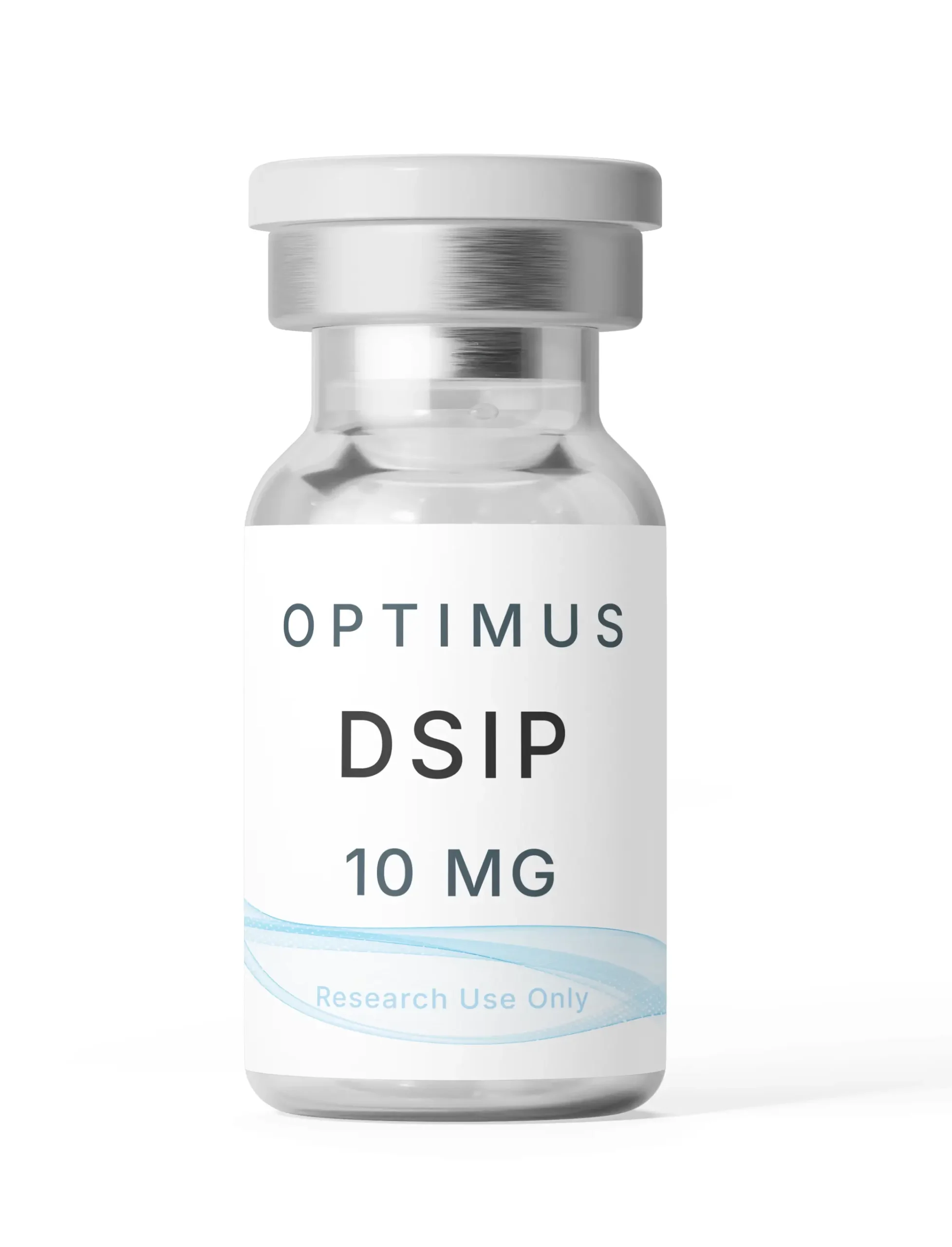



DSIP 10mg
£17.50
| Quantity | Price | Discount |
|---|---|---|
| 2 | £16.63 | 5% |
| 3-9 | £15.75 | 10% |
| 10+ | £14.88 | 15% |
- Purity: 99.11% (HPLC)
- Batch-controlled manufacturing
- Secure packaging for laboratory handling
- Storage: Store lyophilised powder frozen for long-term stability.
- Following preparation in accordance with laboratory protocols, store solutions refrigerated (2–8 °C).
- Research use only (not for human or veterinary use)
Get notified when it's back in stock

- Purity: 99.11% (HPLC)
- Batch-controlled manufacturing
- Secure packaging for laboratory handling
- Storage: Store lyophilised powder frozen for long-term stability.
- Following preparation in accordance with laboratory protocols, store solutions refrigerated (2–8 °C).
- Research use only (not for human or veterinary use)
Deep sleep is one of the most fascinating states of human physiology. During this stage, the brain produces distinctive slow-frequency electrical patterns known as delta waves, reflecting complex neurological processes involved in sleep regulation and biological rhythms.
DSIP (Delta Sleep-Inducing Peptide) is a nine-amino-acid research peptide best known for its association with deep sleep, slow-wave activity and sleep–wake regulation. Originally identified through experimental sleep research, DSIP has been investigated for its potential involvement in the molecular signalling pathways that influence sleep architecture and neuroendocrine function.
For a fuller overview of the research background to this compound, see our What Is DSIP? guide.
Key Research Areas
- Deep sleep and slow-wave activity
- Sleep–wake cycle regulation
- Neuroendocrine and growth hormone signalling
- Neuropeptide and neurological communication
DSIP occupies a distinctive position within sleep-related peptide research. Its discovery emerged from investigations into whether naturally occurring molecules could influence the neurological processes responsible for sleep.
This research introduced an intriguing possibility: that specific peptides might participate in the complex chemical communication associated with transitions between wakefulness and sleep.
One of the most prominent areas of DSIP research is slow-wave sleep, commonly referred to as deep sleep.
This stage of non-rapid eye movement (NREM) sleep is characterised by prominent delta-wave activity, reflecting synchronised patterns of neuronal activity across the brain.
Early animal studies involving DSIP reported changes in sleep onset, total sleep duration and the proportion of time spent in deep slow-wave sleep. These observations helped establish the peptide’s association with sleep physiology and encouraged further investigation into its biological activity.
Beyond individual sleep stages, researchers have explored DSIP in relation to sleep architecture.
Sleep architecture describes how the brain progresses through different stages of sleep, including lighter NREM sleep, deep slow-wave sleep and rapid eye movement (REM) sleep.
Each stage involves distinct patterns of neurological activity and regulatory signalling. Investigating how these stages are organised remains an important area of neuroscience, particularly when examining molecules associated with sleep-related brain activity.
DSIP has also attracted interest within neuroendocrine research, where neurological signalling and hormonal regulation intersect.
The neuroendocrine system coordinates communication between the brain and endocrine organs, contributing to biological processes that follow natural daily rhythms.
Experimental investigations have examined relationships between DSIP, growth hormone release and hypothalamic signalling, suggesting possible connections between sleep-associated neurological activity and endocrine regulation.
Another area of scientific interest is neuropeptide communication.
Neuropeptides are short chains of amino acids that can influence molecular signalling within the nervous system. Their activity may involve interactions between neurons, specialised receptors and other signalling molecules.
Research involving DSIP has explored its relationship with endogenous neuropeptides, including Met-enkephalin, as well as signalling processes associated with the hypothalamus and pineal gland.
These investigations contribute to a broader understanding of how peptide-mediated communication may intersect with the neurological systems involved in sleep and biological rhythms.
What makes DSIP particularly interesting is the relationship between its sleep-associated research history and its wider neuroendocrine profile.
Although originally identified through experiments involving delta-wave activity, subsequent research has explored several additional aspects of neurological and hormonal communication.
Its precise physiological mechanisms remain under investigation, and experimental findings should not be interpreted as established effects in humans.
For researchers interested in the molecular science of sleep, DSIP represents a distinctive peptide at the intersection of sleep physiology, neurological signalling and neuroendocrine biology.
Chemical name: Delta Sleep-Inducing Peptide (DSIP)
Synonyms: DSIP; Emideltide
Peptide length: 9 amino acids (nonapeptide)
Sequence (1-letter): WAGGDASGE
Sequence (3-letter): Trp-Ala-Gly-Gly-Asp-Ala-Ser-Gly-Glu
Molecular formula: C35H48N10O15
Molecular weight: 848.82 g/mol
CAS: 62568-57-4
Form: Lyophilised (freeze-dried) powder
Appearance: White to off-white solid
For storage and handling of this material, see our guide on how to store peptides.
This product is supplied strictly for laboratory research purposes. It is not intended for human consumption or veterinary use and is not marketed for the diagnosis, treatment, cure, mitigation, or prevention of any disease or medical condition. No directions for personal use are provided or implied. The purchaser is responsible for ensuring compliant handling, storage, and use in accordance with applicable laws and regulations.
Certificate of Analysis for DSIP 10mg — verifying purity, identity, and quality.
Related Products


BPC-157
Get notified when it's back in stock
CJC-1295 without DAC
Get notified when it's back in stock


Reviews
There are no reviews yet.